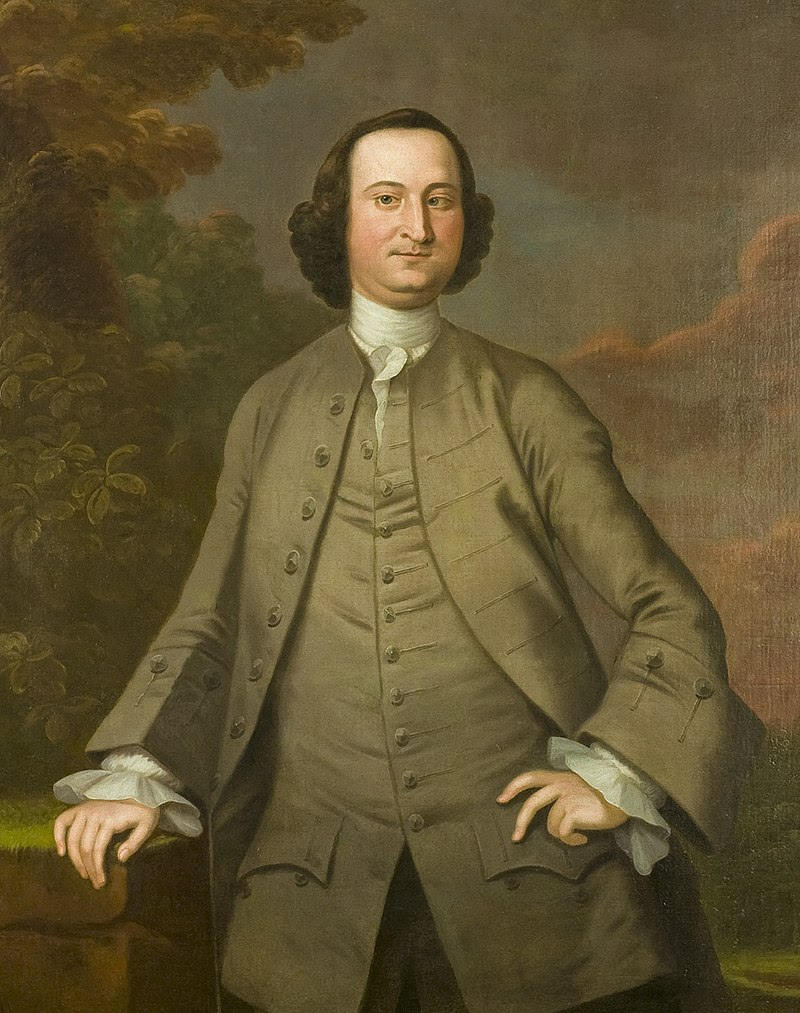
Fielding Lewis was born on July 7, 1725, into one of colonial Virginia's most prominent families. The Lewises were well-established merchants with extensive landholdings in and around Fredericksburg, and Fielding would carry on that tradition of commerce and civic leadership. Through their common great-grandfather, Augustine Warner II, he was also a second cousin to George Washington — a connection that would shape both his family life and his place in American history.
In 1750, Lewis married Catherine Washington, who was both his second cousin and the aunt of George Washington. The couple had three children together before Catherine's untimely death in February of that same year. On May 7, 1750, Lewis married again — this time to Betty Washington, the only surviving sister of George Washington. Their union produced eleven children, seven of whom lived to adulthood. One of their sons, Lawrence Lewis, would later marry Eleanor Parke Custis, the granddaughter of Martha Washington, further deepening the ties between the two families.
On a rise overlooking Fredericksburg, Lewis built an elegant Georgian mansion on his property — a home that would later be known as Kenmore and celebrated for its extraordinary decorative plasterwork. He also pursued business ventures beyond Virginia's tidewater region. In November 1763, Lewis and Washington became major shareholders in the Dismal Swamp Land Company, an ambitious scheme to drain a vast, heavily vegetated area spanning southeast Virginia and northeast North Carolina and convert it into farmland. The swamp was unusual in that water drained from it rather than into it, and the company hoped to harvest lumber while preparing the land for agriculture. The venture ultimately failed during their lifetimes, not turning a profit until long after both men had passed away.
As tensions with Great Britain escalated, Lewis emerged as one of the most ardent supporters of the Revolutionary cause in Virginia. He and Washington maintained a regular correspondence during the early years of the conflict, exchanging letters on the formation of an American army and the shifting political loyalties within the colony. In March 1776, Lewis wrote to Washington with encouraging news: the cause for independence was gaining ground rapidly in Virginia, helped in no small part by the remarkable popularity of Thomas Paine's pamphlet Common Sense.
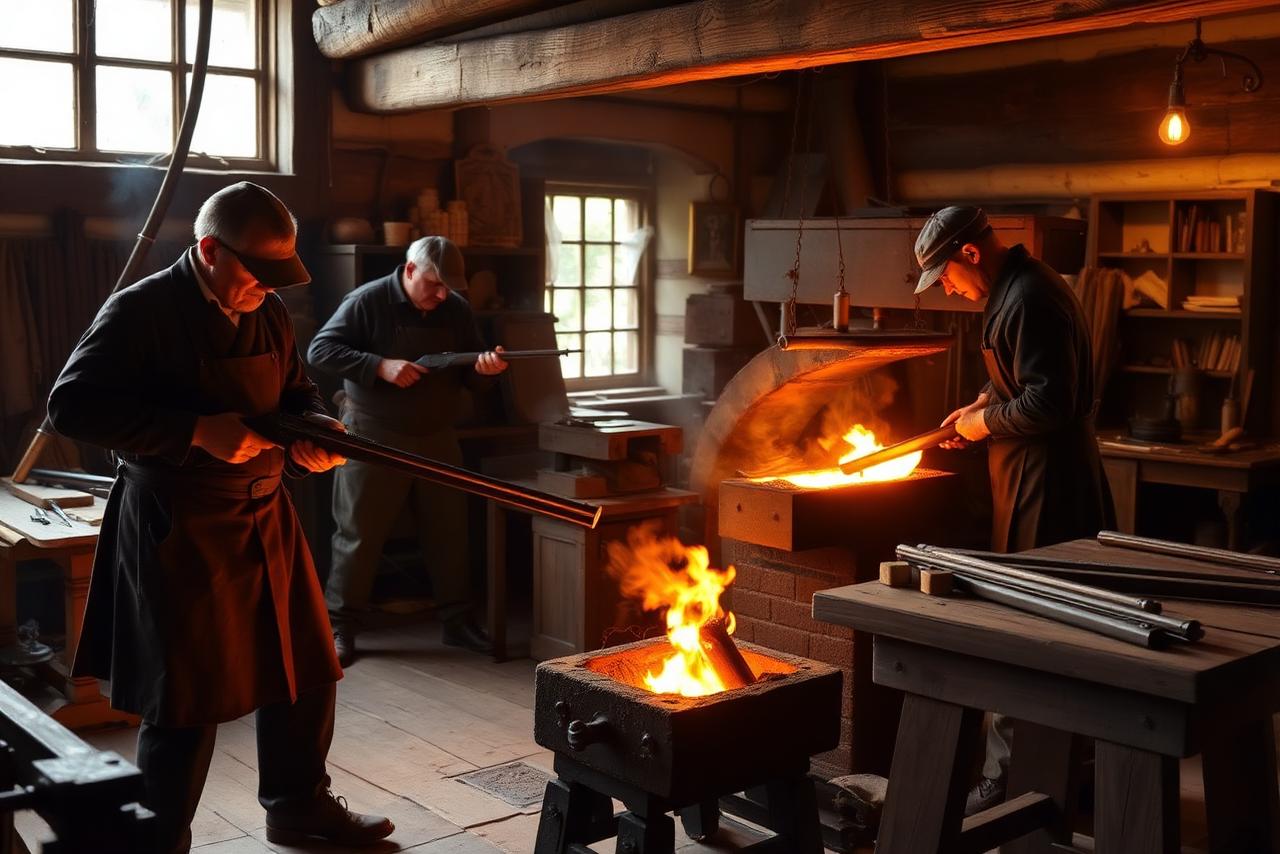
Lewis's devotion to the patriot cause was deeply personal and costly. A serious respiratory illness — likely tuberculosis — prevented him from taking the field as a soldier, so he found another way to serve. He devoted a substantial portion of his personal fortune to operating a gun manufacturing works in Fredericksburg, with the ambitious goal of producing roughly twelve muskets each day. His correspondence with Washington paints a sobering picture of conditions in Virginia: a desperate shortage of arms and supplies threatened to cripple the revolutionary effort before it could fully take shape. Beyond the gunnery, Lewis purchased and outfitted ships for the defense of the Rappahannock River and supplied American troops directly from his own store. Despite repeated appeals to Congress for reimbursement, the funds never came. Lewis was forced to pour ever more of his own wealth into the war, slowly draining the estate he had spent a lifetime building.
Tuberculosis plagued Lewis throughout the Revolutionary War, and his health finally gave out on December 7, 1781 — just six weeks after Lord Cornwallis's surrender at Yorktown. He did not live to see the peace that his sacrifices had helped secure. In his will, Lewis left his shares in the Dismal Swamp Land Company and land in Nansemond County — both purchased in partnership with Washington — but these assets would have to be sold to settle his considerable debts. Washington, ever the pragmatic partner, agreed to the sale provided the lands fetched a fair price that would protect both families' interests.
Betty Washington Lewis outlived her husband by sixteen years, passing away on March 31, 1797, while visiting her daughter in Culpeper, Virginia. The debts Fielding had accumulated in service to his country cast a long shadow, and Betty struggled with financial hardship during her later years — a poignant reminder that the cost of independence was borne not only on battlefields but in parlors and counting houses as well. Today, Kenmore — named by later owners of the Lewis estate — stands open to the public as a museum owned by the George Washington Foundation, preserving the memory of a man who gave everything he had for the cause of liberty.